
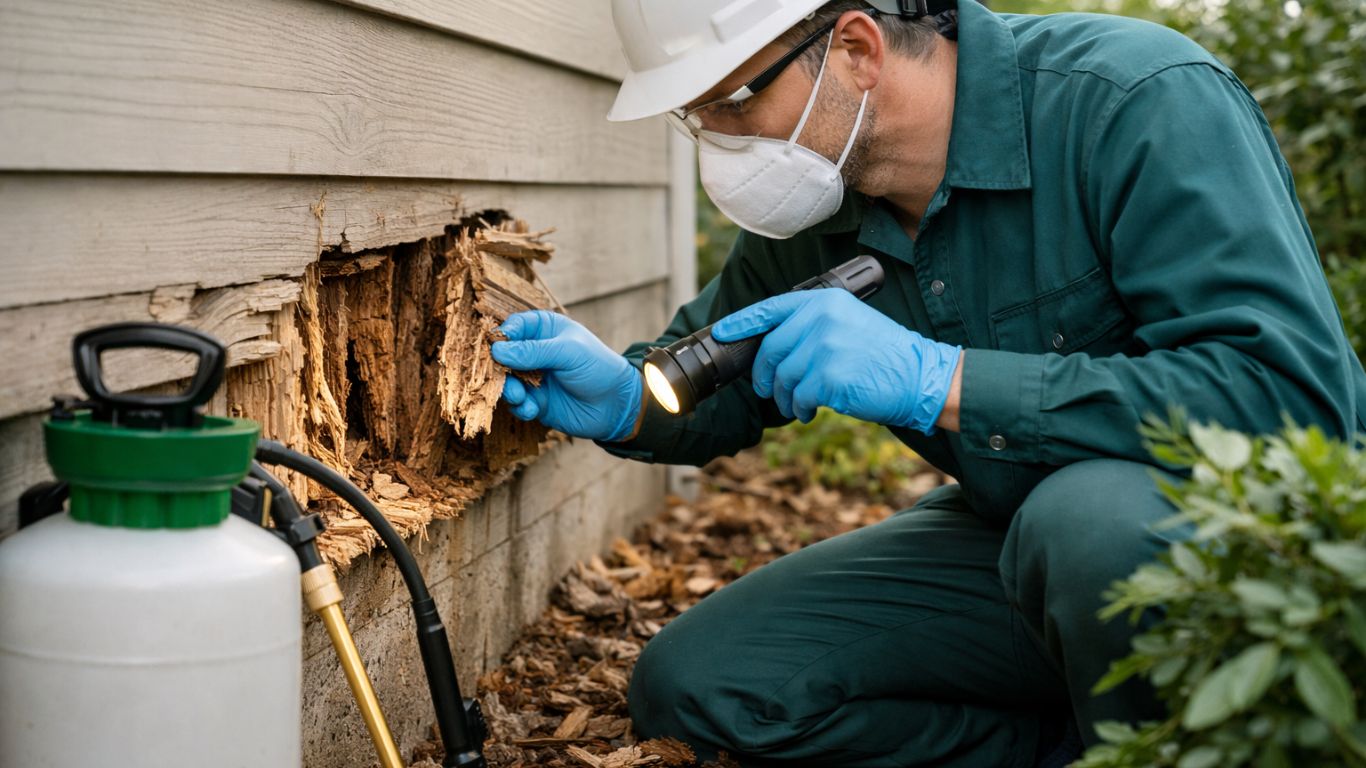
Termites work quietly. By the time a door frame crumbles or a wooden cabinet collapses, the colony may already be large. In Indian homes they often enter through soil, damp walls, door frames, and wooden furniture that stays in contact with the floor.
Signs you should not ignore
- Mud tubes on walls, skirting, or the outside of the building
- Wood that sounds hollow when you tap it
- Doors and windows that suddenly stick or sag
- Blistered paint or tiny holes in wood
- Piles of discarded wings after the monsoon or a humid night
- Fine powder or pellets near furniture and cupboards
Why monsoon and moisture matter
Termites need moisture. Leaking bathrooms, wet soil against the wall, and poor ventilation under wooden floors give them a path inside. Checking these areas after heavy rain is one of the cheapest ways to protect the house.
Treatment is not the same as a one-time spray
Serious termite work needs inspection of the structure, the right chemical barrier or wood treatment, and follow-up. Surface spraying a room once rarely protects beams, frames, and furniture for the long term.
Mr Antidot provides professional termite treatment for homes and commercial buildings. If you see even one of the signs above, call us before the damage spreads to more rooms.